EN



What Environmental Adaptability Does Active Balancing Low Voltage Battery Have
When evaluating energy storage systems for deployment in Africa, the Middle East, or Australia, the question is not just about capacity or cycle life under ideal conditions — it comes down to how the battery holds up when the environment stops cooperating. For any active balancing low-voltage battery installation, temperature swings, humidity, dust, and mechanical stress are daily realities in these markets, and they expose weaknesses of any balancing design that was only tested in a climate-controlled setting.
Understanding what environmental adaptability an active balancing low-voltage battery offers — not just in theory, but in the conditions that matter for your application — is what this article covers in detail.
Why Environmental Adaptability Matters More Than Spec Sheets Suggest
Battery specifications are typically measured at 25 degrees C with stable humidity and no vibration. That is a useful reference point, but it rarely describes the environment where the pack will actually operate. In sub-Saharan Africa, ambient temperatures regularly exceed 40 degrees C in outdoor installations. In highland regions of the Middle East and Central Asia, overnight temperatures can fall below -10 degrees C. In coastal Australia, salt-laden air and humidity cycles create corrosion risks that most datasheets do not account for.
In these conditions, the behavior of a battery balancing system becomes a critical variable. A poorly adapted balancing circuit does not just underperform — it can accelerate pack degradation by introducing uneven charge distribution under thermal stress. The environmental adaptability of an active balancing low-voltage battery system is therefore a primary selection criterion for demanding markets.
Temperature Range Adaptability
Temperature is the most discussed environmental variable in battery performance. An active balancing low-voltage battery system addresses temperature sensitivity in two distinct ways that passive balancing cannot replicate.
First, active balancing continuously redistributes charge energy between cells rather than dissipating it as heat. In high-temperature environments, passive resistor-based balancing generates additional heat at a time when the pack is already thermally stressed. Active topologies — whether inductor-based, capacitor-based, or transformer-coupled — move energy without that heat penalty.
Second, well-designed active BMS platforms implement temperature-aware balancing logic. At low temperatures below approximately 0 degrees C, lithium-ion cells become susceptible to lithium plating during charging. An active balancing low-voltage battery pack with preheating-integrated BMS can manage cell-level state-of-charge more conservatively until temperature recovers to a safe window. Research published in 2025 demonstrated that integrating preheating with aging-aware active balancing at low temperatures measurably improved both capacity recovery and balance quality.
Typical operating ranges for production-grade active BMS modules fall in the -20 to +60 degrees C range for discharge and -10 to +45 degrees C for charging. Where possible, ask for derating curves — nominal specifications rarely capture real-world limits.
Humidity and Moisture Adaptability
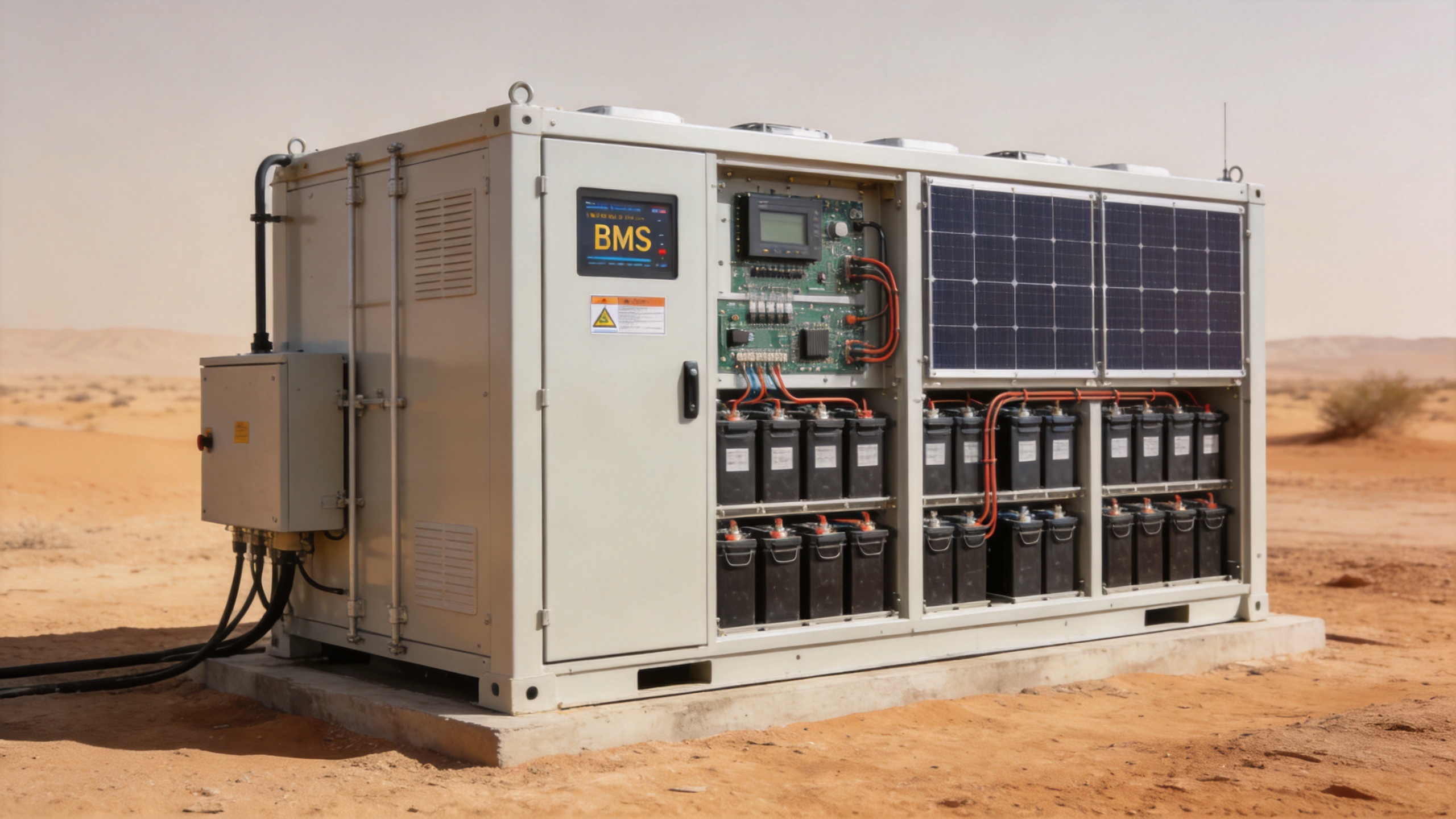
Humidity is one of the underappreciated stressors in battery pack design. Active balancing circuits are more complex than passive shunt resistors: they include inductors, capacitors, switches, and control logic. Each component can be affected by moisture ingress if the enclosure and potting design are not properly addressed. In coastal or tropical environments, relative humidity frequently exceeds 85%, and condensation cycles can occur during temperature transitions.
For active balancing low-voltage battery deployments in humid markets, the relevant question is IP rating and conformal coating practice. A well-built active BMS with IP55 or IP65-rated enclosure and conformal coating on circuit boards will maintain reliable performance where an unprotected passive balancing circuit might corrode over 2 to 3 seasons of operation.
Vibration and Shock Resistance
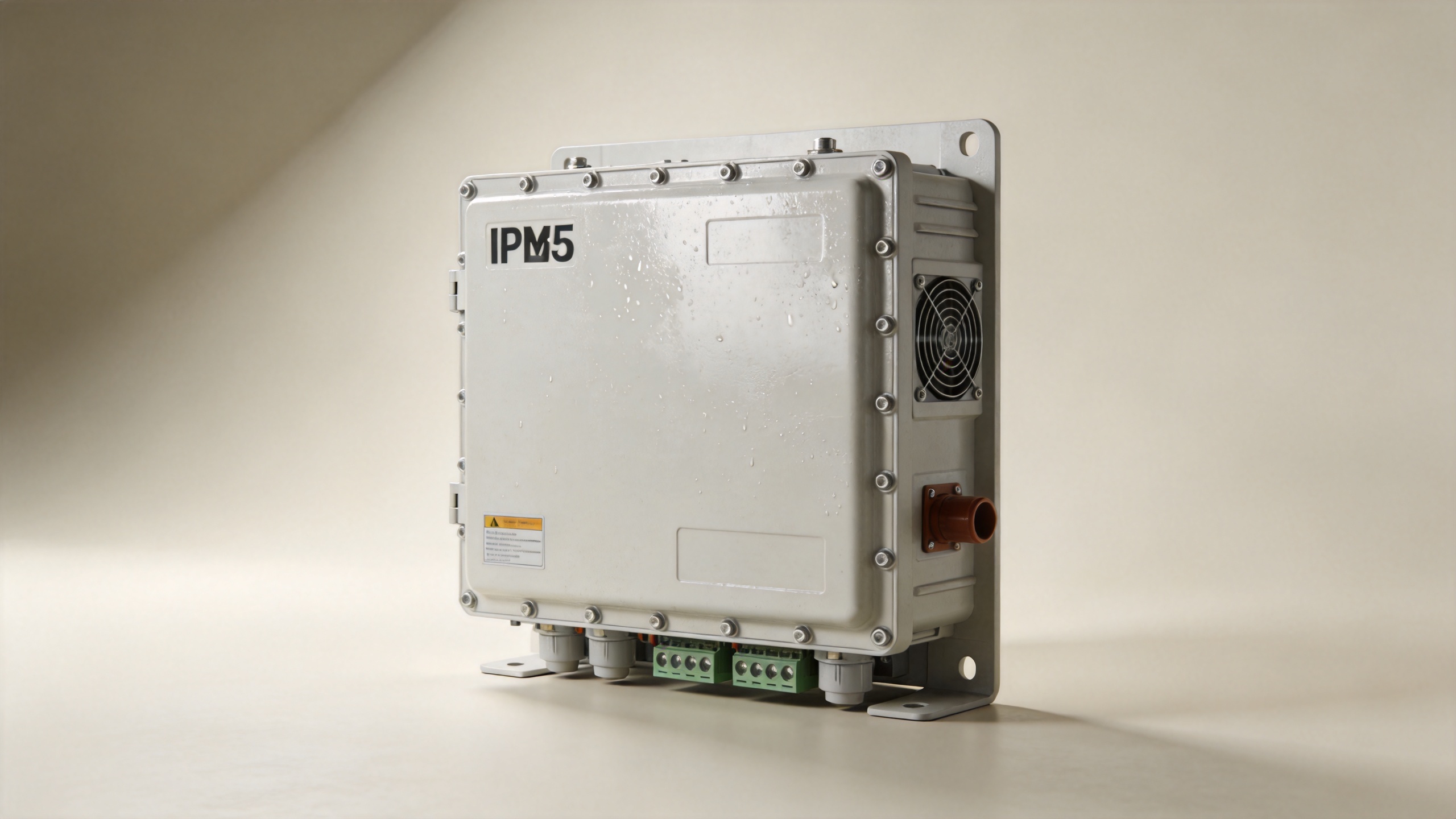
Vibration matters primarily in mobile, off-grid, or vehicle-mounted installations. For active balancing low-voltage battery packs installed in off-grid telecom towers, mobile units, or systems accessed by rough road, vibration tolerance becomes a key reliability consideration.
Active balancing circuits that use larger passive components — particularly inductors and transformers — require attention to mechanical mounting and potting if they are to survive sustained vibration. Capacitor-switched designs with smaller, lower-mass components generally offer less susceptibility to vibration-induced failure.
If your installation includes significant vibration, ask your supplier about IEC 62619 or UN38.3 vibration test compliance rather than assuming all active balancing architectures perform equally under shock.
Altitude and Partial Pressure Effects
Altitude is often overlooked in battery environmental discussions, but it affects both thermal management and electrical insulation. At 3,000 metres above sea level — encountered in highland East Africa, parts of Central Asia, and certain Australian outback regions — air density is roughly 30 percent lower. This reduces convective cooling efficiency and lowers the breakdown voltage threshold for air-insulated components.
For active balancing low-voltage battery circuits operating at voltages typical of residential packs (48V nominal or below), air breakdown is rarely a limiting concern within normal altitude ranges. However, reduced convective cooling means self-generated heat from switching circuits and gate drivers builds up more quickly. For high-altitude deployments, verify that the BMS thermal design includes margin for reduced cooling efficiency.
Dust and Particulate Contamination
In arid markets — the Sahel, the Arabian Peninsula, inland Australia — dust ingress is a consistent operational challenge. Fine particulate matter can bridge PCB traces, clog ventilation paths, and accelerate wear on mechanical components. While an active BMS has more circuit complexity than a passive balancing board, the critical protective factor is enclosure design.
An IP6X-rated enclosure prevents dust ingress entirely. Fan-free convective cooling enclosures will typically outperform actively cooled vented enclosures, which create particulate ingress pathways.
What to Look for When Selecting an Environmentally Adapted System
If your load pattern is stable and your operating environment is moderate, environmental adaptability may not be your primary differentiator. But where peak demand coincides with temperature extremes, or where installation sites have above-average humidity, dust, or vibration, the design choices behind an active balancing low-voltage battery system determine whether you are replacing packs at year 5 or still operating reliably at year 10.
Research indicates that properly implemented active balancing can extend battery pack lifespan by 15 to 25 percent and improve usable capacity by 5 to 10 percent compared to passive approaches. This difference compounds over the operating lifetime of the system, particularly in thermally stressed environments where cell divergence accelerates without active equalization.
When comparing active balancing low-voltage battery options, the most useful specification requests are: operating temperature with derating curves, enclosure IP rating, test standards met (IEC 62619, UN38.3), and the supplier's documented experience in markets comparable to your target region.
Helio designs residential and commercial energy storage systems for markets including Africa, the Middle East, and Australia — environments where environmental adaptability is part of the product requirement. For project-specific consultation on how our active balancing systems perform in your target operating conditions, contact our team directly.
 Hot News