 ×
×
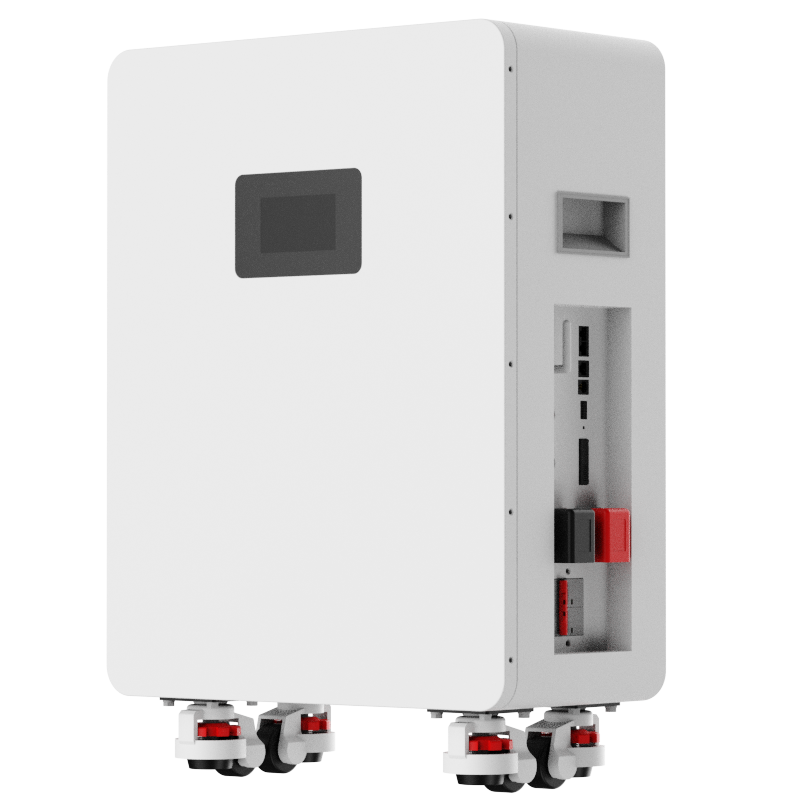
Adding a wall mounted solar battery to a residential or commercial PV setup involves more than just physically securing the unit to a wall and running copper cables. For an energy storage system to run safely and efficiently, the battery and inverter must speak the exact same electrical and digital language.
When digital communication breaks down or voltage ranges mismatch, the system treats the battery as an unrecognized device—refusing to charge or discharge. Here is a technical guide on navigating protocol standards, evaluating AC versus DC coupling architectures, and accurately sizing wall mounted lithium batteries for maximum operational return.
Physical wiring delivers power, but digital communication controls the flow. A wall mounted solar battery functions alongside a hybrid or storage inverter through continuous, real-time data exchange.
A battery's nominal DC voltage must align cleanly with the inverter's Maximum Power Point Tracking (MPPT) or battery input operating window. If the battery voltage sits too low, the inverter cannot draw power efficiently. If it sits too high, internal protection circuits trip instantly.
On the AC side, the system must synchronize smoothly with local grid frequency (50 Hz or 60 Hz) within razor-thin tolerances (typically ±0.5 Hz). Proper synchronization prevents dangerous voltage spikes, protects delicate home electronics, and ensures the inverter disconnects safely when grid power drops out.
The Battery Management System (BMS) acts as the brain of the battery, monitoring individual cell voltages, temperatures, and state-of-charge (SOC). To send this critical data to the inverter, the BMS relies on standardized communication protocols.
Modbus running over an RS485 physical interface remains an industry workhorse for standard data logging and basic telemetry. Building upon Modbus, the SunSpec Alliance defines standardized software models that allow equipment from different manufacturers to interoperate seamlessly. In high-speed, safety-critical environments, Controller Area Network (CAN bus) protocols deliver immediate priority messages, such as instantaneous over-current shutdowns. Without matched protocol firmware, the inverter defaults to a safe state, completely locking out energy transfer.
Choosing how to wire a wall mounted battery into an existing or new solar array comes down to a fundamental architectural choice: AC coupling or DC coupling. Both approaches come with distinct trade-offs regarding round-trip efficiency, installation complexity, and upfront costs.
| Architecture | System Efficiency | Retrofit Suitability | Equipment Requirements |
| DC-Coupled | High (94% – 96%) | Best for new installs or full inverter replacements | Shared Hybrid Inverter with bidirectional DC-DC controller |
| AC-Coupled | Moderate (90% – 92%) | Ideal for retrofitting existing solar arrays | Dedicated Battery Inverter added alongside existing PV Inverter |
In a DC-coupled configuration, the battery connects directly to the DC bus of a shared hybrid inverter. High-voltage DC power generated by solar panels flows straight through a bidirectional converter to charge the battery without converting to AC first. When power is needed, energy undergoes a single DC-to-AC conversion step before powering household loads.
This streamlined pathway delivers high round-trip efficiency, typically between 94% and 96%. Retaining that extra 2% to 4% of energy on every charge cycle adds up to substantial savings over a 10-year service life. However, DC coupling requires a specialized hybrid inverter capable of managing both solar MPPT tracking and battery management simultaneously. For retrofits on older solar systems, replacing a fully functional standard inverter with a hybrid model can raise upfront project costs.
AC coupling integrates the battery on the AC side of the electrical panel using a standalone battery inverter. Power generated by the solar panels is first converted to AC by the existing solar inverter. To charge the battery, that AC power passes into the battery inverter, which converts it back to DC. When discharging, the power undergoes a third conversion back to AC.
Because of this triple-conversion route, round-trip efficiency drops slightly to around 90% to 92%. Despite the efficiency penalty, AC coupling is the preferred path for retrofitting legacy solar systems. Installers can leave the original PV inverter untouched, mounting the battery and its dedicated inverter alongside the existing panel board. This keeps installation friction low and avoids voiding existing solar warranties.
A wall mounted solar battery relies entirely on its controlling inverter to manage charge profiles and execute safety rules. Hybrid inverters must manage dual DC inputs smoothly while matching utility interconnection standards.
Advanced hybrid inverters pair high-voltage PV inputs with dedicated bidirectional DC-DC stages for battery control. The inverter's AC output rating should ideally be sized at 1.0 to 1.2 times peak load demand to prevent power clipping during heavy surge events, such as when HVAC units or water pumps start up.
Firmware plays a vital role in long-term system health. Modern lithium iron phosphate (LiFePO₄) wall batteries require dynamic charge profiling. The inverter must adjust charge currents based on temperature data received directly from the BMS. Remote over-the-air firmware updates allow manufacturers and installers to expand protocol support, adjust voltage safety thresholds, and keep systems fully compliant with evolving grid codes over time.
Sizing a wall mounted solar battery purely on peak household load often leads to poor performance. A better approach balances usable storage capacity directly against daily solar production.
A reliable industry rule of thumb targets usable battery capacity at 1.2 to 1.5 times the average daily solar energy yield, taking into account safe Depth of Discharge (DOD) limits. Because LiFePO₄ batteries operate best when kept within an 80% DOD window to prolong cycle life, nominal storage capacity must be calculated accordingly.
For example, an array producing 10 kWh of surplus generation on an average sunny day pairs best with a battery delivering 12 kWh to 15 kWh of usable capacity. Under-sizing the battery leaves clean solar energy uncaptured, forcing excess power back onto the grid at low feed-in tariffs. Over-sizing the battery leads to chronic undercharging during winter months, which can accelerate calendar aging without delivering meaningful returns.
An integrated Energy Management System (EMS) transforms passive battery hardware into an active financial asset. By monitoring load patterns, solar forecasts, and time-of-use utility rates in real time, the EMS automates energy time-shifting.
During midday hours, when solar generation spikes and electricity rates remain low, the EMS redirects surplus power into the wall mounted battery. As evening arrives and utility rates peak, the system discharges stored energy to cover household loads—effectively flattening grid demand. This automated time-shifting lowers utility bills while reducing strain on the local electrical grid.
Achieving seamless integration between wall mounted batteries, hybrid inverters, and EMS software requires precision manufacturing and rigorous quality control. Battery enclosures must combine clean industrial design with robust thermal management and certified safety protections.
For distributors, project developers, and system integrators seeking dependable energy storage solutions, partnering with experienced manufacturers is crucial. Tier-one vendors like Helio Energy deliver fully integrated wall mounted battery solutions featuring universal protocol compatibility, ultra-reliable LiFePO₄ cell configurations, and comprehensive OEM/ODM engineering support. With scalable production lines and an established global supply chain, Helio Energy helps energy companies deploy safe, high-performance battery storage systems backed by long-term technical reliability.
 Hot News
2026-08-25
2026-08-18
2026-08-13
2026-08-08
2026-08-03
2026-06-28

 EN
EN